
By Hamish Rodgers-Wilson, Australian Home Brewing, established 1968
Rum is sugarcane, fermented and then distilled. There are two ways to make rum at home: flavour a clean neutral spirit with a rum essence, or ferment a molasses wash and distil it. Distilling spirits in Australia needs an ATO excise licence, and the distilling section below sets out where the law sits.
Neither route starts with the still. The rum character comes from the wash and the oak, so the real choice is how much time you want to give it. Australian Home Brewing has supplied home brewers from Melbourne since 1968 and stocks the gear for both routes, except the molasses itself.
What is rum made from?
Rum is made from sugarcane, either molasses or sugarcane juice, fermented and then distilled. Most rum is made from molasses, a byproduct of sugar production, as Wikipedia's entry on rum notes.
That leaves three basic ingredients: a cane sugar source, water and yeast. Molasses brings the dark, toffee-like character people associate with rum.
The colour on the label tells you how the rum was finished. According to the same Wikipedia entry, light (white) rums may be unaged, or aged and then filtered to remove colour. Gold rums often take their colour and body from ageing in wooden barrels, and spiced rums are flavoured with spices.
Two routes to rum at home
The two routes end in the same glass but take very different amounts of your time. Here they are side by side.
| Route | What you need | Time to a finished bottle | What drives the flavour |
|---|---|---|---|
| Essence | Neutral spirit at 40% ABV, one rum essence | About a day with a bought neutral spirit | The essence you pick |
| Molasses wash | Molasses, brown sugar, rum yeast, nutrient, oak, and a pot still (distilling needs an ATO excise licence) | Still Spirits' recipe: 3 weeks fermenting, then 3 months on oak | The wash and the oak |
If you want a bottle of spiced rum on the shelf soon, use an essence. If you hold a licence and want to find out what your own molasses rum tastes like after months on oak, the wash route is the one to read about. The essence route is also a low-commitment way to work out which style you actually drink.
The essence route
The essence route starts from a clean neutral spirit at 40% ABV, and a plain, unflavoured bought vodka works. The essence pages list "neutral spirit or vodka" as the base. Licence holders who make their own base can follow how to make vodka at home. The cleaner the base, the more the essence tastes like rum and not like the spirit underneath it.
None of this needs to be perfect. Beginners get told everything is critical, so they get scared off, and most of it is not. As Australian Home Brewing's starter-kit guide puts it: "Clean, not sterile, is enough." A clean bottle and a clean base spirit cover it.
According to the product page for Top Shelf Aussie Gold Rum essence, one 50 ml bottle flavours 2.25 L of 40% ABV neutral spirit. That makes three 750 ml bottles. AHB's Top Shelf essence pages note there is no resting time, though most people find the flavour settles after a day in the bottle.
The essence route in three steps:
- Measure out 2.25 L of clean neutral spirit at 40% ABV. A plain bought vodka works.
- Add one 50 ml rum essence and shake.
- Leave it a day to settle, then bottle.
Then pick your style from the rum essences. A few starting points:
- Top Shelf White Rum for mixing with lime, soda or fruit juice.
- Top Shelf Aussie Gold Rum essence if you drink it with cola.
- Top Shelf Jamaican Dark Rum essence if you drink it neat or over ice.
- Top Shelf Spiced Rum essence for the spiced style without a spice cupboard.
- Top Shelf Dark Spiced Rum essence for a darker, heavier spiced style.
If you can't pick, buy two and blend them. A house rum that sits between two essences is a good result.
The molasses wash route
This route ends at a still, and using a still to make spirits needs an ATO excise licence (see the distilling section below). The wash route is where rum gets its own character, and it starts with blackstrap molasses. Still Spirits' own molasses rum recipe uses 14 kg blackstrap molasses and 7 kg brown sugar for a 60 L wash, fermented for 3 weeks.
On a molasses wash the yeast shapes the flavour, so use one made for rum. According to its product page, Still Spirits rum yeast comes as a 20 g sachet for a 25 L rum wash. It works at 20 to 34 degrees and tolerates up to 15% ABV.
Molasses washes need extra nutrient. The same product page pairs the rum yeast with Dark Spirits nutrient at 50 g per 25 L for molasses washes.
Molasses is sticky and smells like burnt toffee. It will also foam over if you give it the chance. Leave plenty of headroom in the fermenter, or you will be cleaning it off the floor.
Keep the fermenter somewhere stable inside the yeast's working range. The wash is finished when the airlock stops and the gravity reading holds steady across a couple of readings. A wash is cleared fully before it goes near a boiler. Solids and yeast left in the wash cause foaming and off-flavours in the still.
Distilling a rum wash
Start with where the law sits. Owning a still is legal. Under the Excise Act 1901 (Cth), distilling spirits in Australia without an ATO excise licence is an offence, including at home, as set out in the complete guide to home distilling in Australia. Distilling water and extracting botanical oils do not need a licence. What follows describes what the equipment does for licence holders.
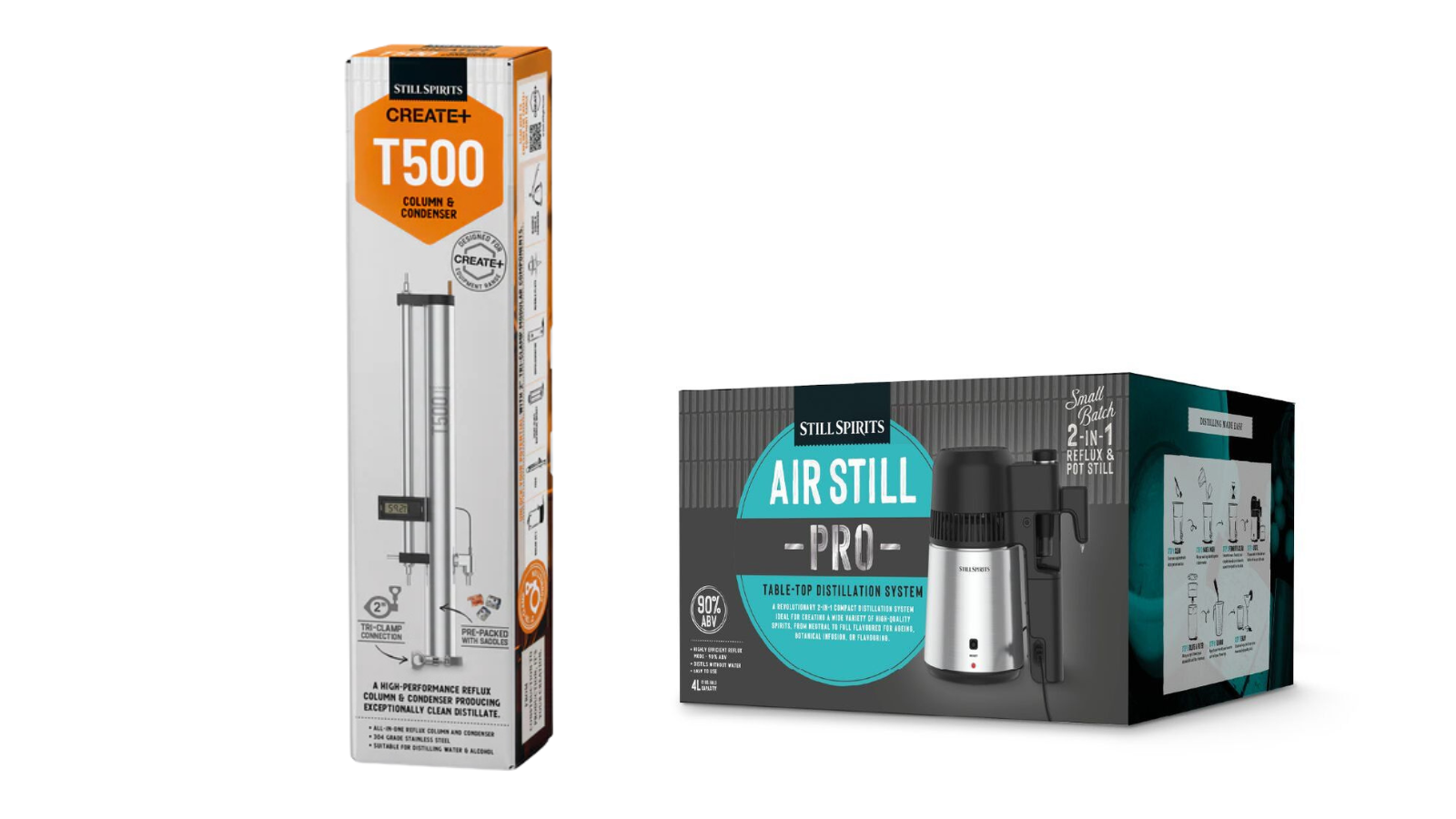
Pot still mode suits rum because it keeps the flavour compounds that make it rum. Wikipedia notes that pot still output carries more congeners than column still output, and that gives a fuller-tasting rum. A reflux column strips those compounds out to make a clean neutral spirit, the base for vodka and gin. That is the opposite of what rum needs. For the full comparison, see pot still or reflux still.
The Air Still Pro is a benchtop unit that switches between the two modes. According to the product page, it holds 4 L and, over two fills, yields 2.25 L at 40% ABV per 8 L of wash. It distils at 80% ABV in pot still mode and 90% in reflux mode, before dilution.
Spirit coming off a pot still sits well above drinking strength, so licensed producers dilute it with clean water to bottling strength. The essence route above works at 40% ABV, and that is a sensible target here too.
Ageing and colour
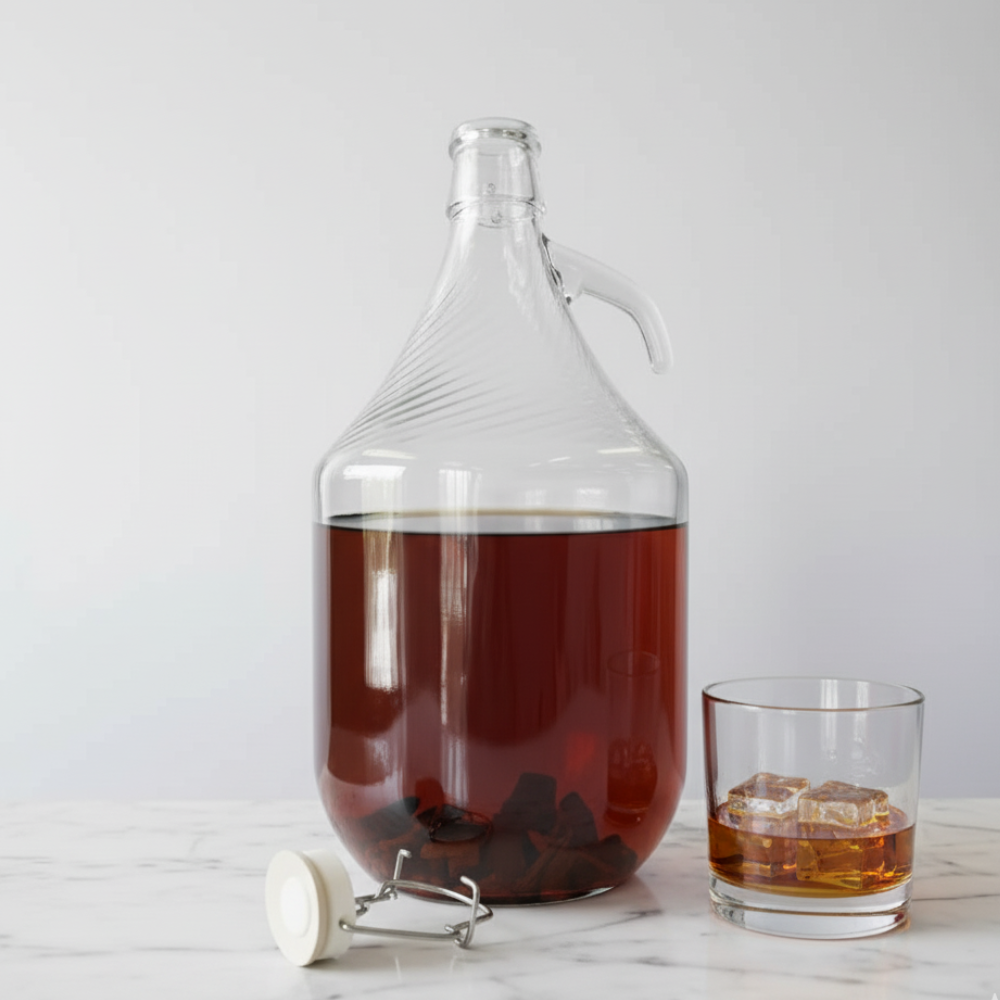
Oak is where a white spirit becomes gold or dark rum, and it works the same on a bought white rum as on any other white spirit. Still Spirits' own molasses recipe ages the spirit on oak for 3 months. Treat that as the reference point, then taste as you go.
Taste it every couple of weeks and pull the oak when you like what you taste. Oak keeps working past the point you wanted, and you cannot take it back out.
For spiced rum, the spice goes in after distilling. Still Spirits' own recipe steeps flavourings such as vanilla and cinnamon in the finished spirit for a few weeks. Add less than you think, taste, and add more the next day.
Frequently asked questions
How do you make rum at home?
You make rum at home through an essence or through a molasses wash, and the time you have decides which. The essence route adds a rum essence to neutral spirit at bottling strength. The wash route ferments molasses with a rum yeast, then distils and rests it on oak. Distilling spirits in Australia needs an ATO excise licence under the Excise Act 1901 (Cth); owning a still is legal.
What are the basic ingredients of rum?
The basic ingredients of rum are a sugarcane source, water and yeast. Most rum is made from molasses, according to Wikipedia. Oak and spice come later, for colour and flavour.
How long does homemade rum take?
Homemade rum takes about a day by the essence route and months by the molasses route. The essence route is a bought neutral spirit plus a rum essence, with about a day for the essence to settle. Still Spirits' molasses recipe runs 3 weeks of fermenting, then distilling, then 3 months on oak. The distilling step needs an ATO excise licence.
Is rum difficult to make?
Whether rum is difficult to make depends on the route. The essence route needs a clean base spirit and a day of settling. The molasses route is a fermenting and distilling process over months, and distilling spirits in Australia needs an ATO excise licence, so that route is only open to licence holders.
Is rum basically vodka?
No, rum is not basically vodka, although both start as a fermented sugar wash. Vodka is stripped back to neutral in a reflux still. Rum keeps the molasses character that vodka strips out.

Leave a comment
This site is protected by hCaptcha and the hCaptcha Privacy Policy and Terms of Service apply.