
Which starter kit is right for you?
Two or three quick questions and we'll show you the right starter kit, what's in the box and what to add.
Filters
8 products


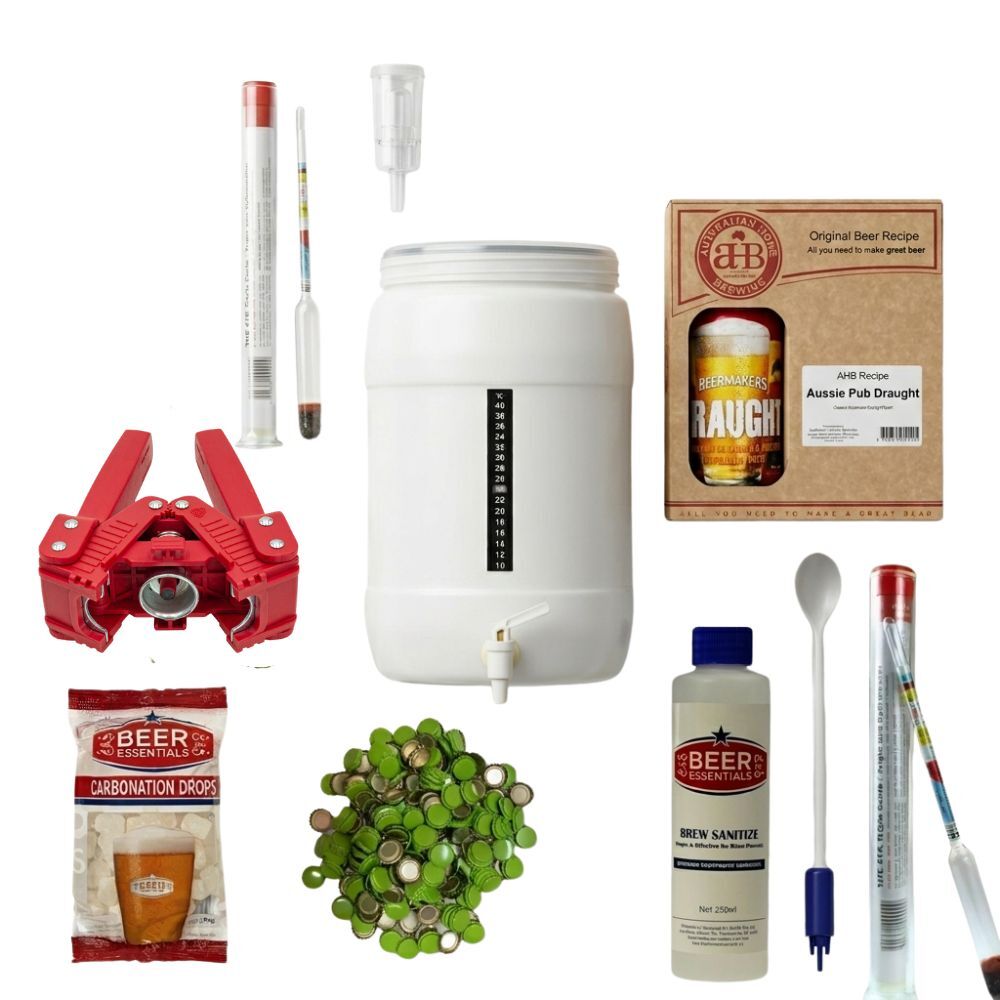


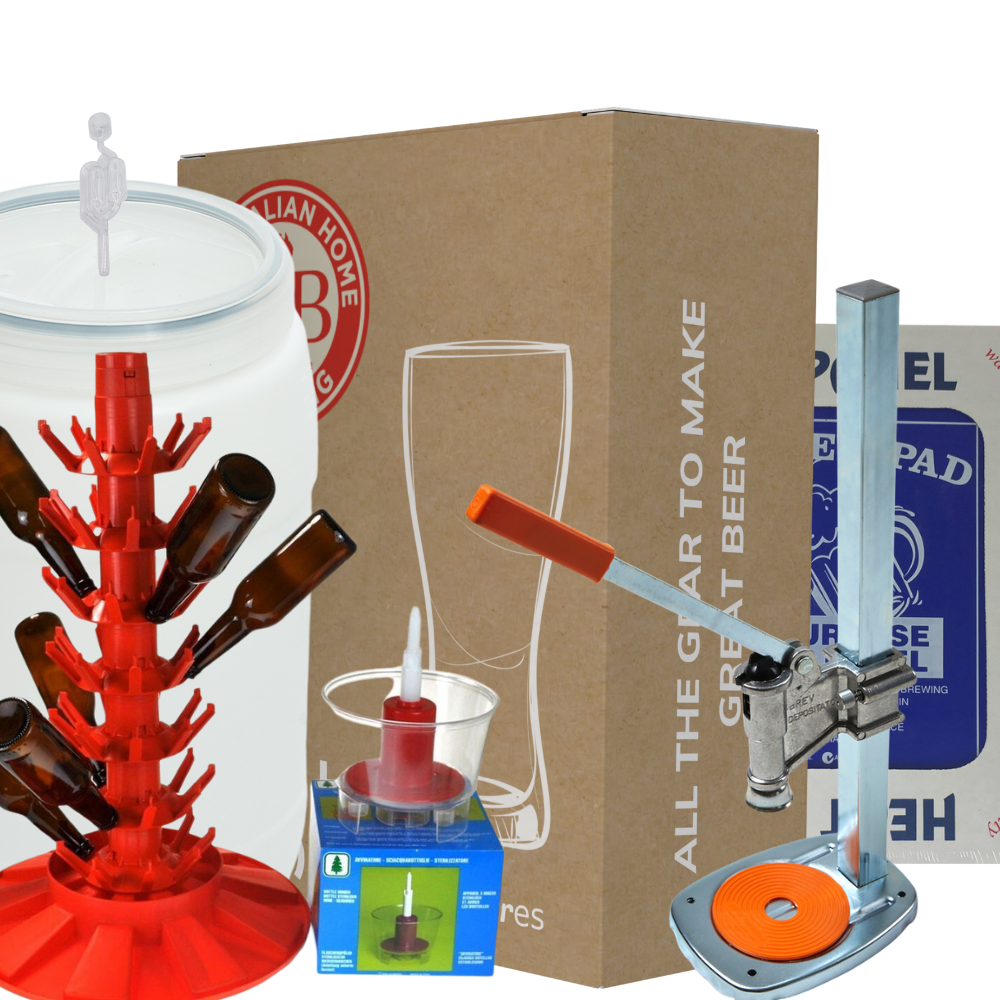


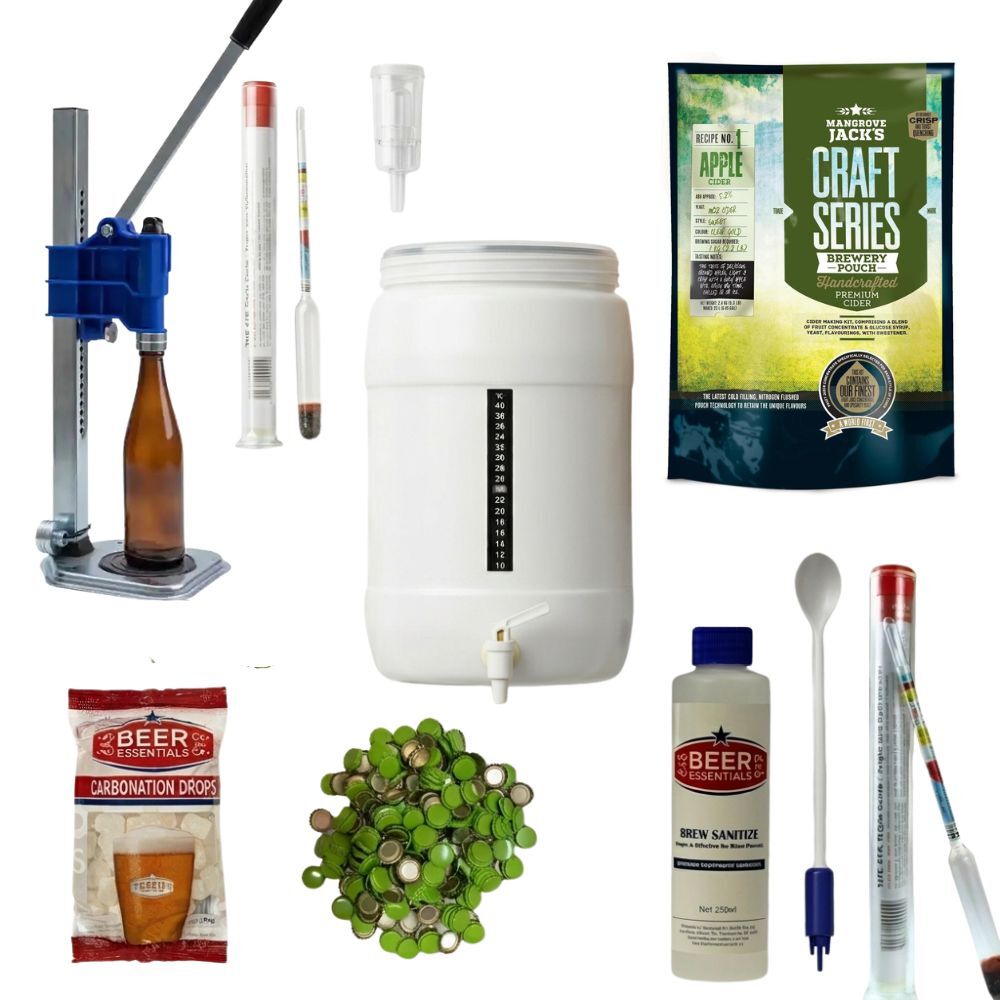

Compare the starter kits
Complete home brew beer kits that brew about 21 litres, with a fermenter, capper and sanitiser, plus the beer you choose from over 60 recipe kits. Five kits from $154.90. Brewing in Australia since 1968.
| What you get | BasicThe essentials. Lowest outlay for your first batch. | StandardBasic plus a proper capper. | DeluxeThe Italian bench capper. | Super DeluxeDeluxe plus a heater pad for winter. | Black LabelEverything. Buy once, nothing to add. |
|---|---|---|---|---|---|
| Price | $154.90 | $169.90 | $199.90 | $259.90 | $350.00 |
| Batch size | About 21L | About 21L | About 21L | About 21L | About 21L |
| Fermenter | 30L | 30L | 30L | 30L | 30L |
| Airlock, tap and thermometer | Yes | Yes | Yes | Yes | Yes |
| Capper | Hand capper | Twin-lever capper | Bench capper | Bench capper | Bench capper |
| Heater pad | No | No | No | Yes | Yes |
| Bottle rinser | No | No | No | No | Yes |
| Carbonation drops | Yes | Yes | Yes | Yes | Yes |
| Sanitiser | Yes | Yes | Yes | Yes | Yes |
| Your choice of beer | Yes, any recipe kit | Yes, any recipe kit | Yes, any recipe kit | Yes, any recipe kit | Yes, any recipe kit |
| Buy |
-
- Batch sizeAbout 21L
- Fermenter30L
- Airlock, tap and thermometerYes
- CapperHand capper
- Heater padNo
- Bottle rinserNo
- Carbonation dropsYes
- SanitiserYes
- Your choice of beerYes, any recipe kit
-
- Batch sizeAbout 21L
- Fermenter30L
- Airlock, tap and thermometerYes
- CapperTwin-lever capper
- Heater padNo
- Bottle rinserNo
- Carbonation dropsYes
- SanitiserYes
- Your choice of beerYes, any recipe kit
-
- Batch sizeAbout 21L
- Fermenter30L
- Airlock, tap and thermometerYes
- CapperBench capper
- Heater padNo
- Bottle rinserNo
- Carbonation dropsYes
- SanitiserYes
- Your choice of beerYes, any recipe kit
-
- Batch sizeAbout 21L
- Fermenter30L
- Airlock, tap and thermometerYes
- CapperBench capper
- Heater padYes
- Bottle rinserNo
- Carbonation dropsYes
- SanitiserYes
- Your choice of beerYes, any recipe kit
-
- Batch sizeAbout 21L
- Fermenter30L
- Airlock, tap and thermometerYes
- CapperBench capper
- Heater padYes
- Bottle rinserYes
- Carbonation dropsYes
- SanitiserYes
- Your choice of beerYes, any recipe kit
Which home brew beer kit should I buy?
Every starter kit brews the same thing: about 21 litres of beer (roughly 55 stubbies) in a 30L fermenter, with everything to bottle it into glass. What changes as you go up the range is the gear that makes bottling day quicker and winter brewing easier. The Basic ($154.90) is the lowest outlay, the Deluxe ($199.90) is our most popular, and the Black Label ($350) is the whole setup. The beer is up to you: pick an Aussie pub draught, a pale ale, an amber, a stout or a porter from the recipe drop-down.
How long until I can drink it?
Brew day takes 1 to 2 hours. Fermentation takes 7 to 10 days, then the bottles need time to carbonate. You can have a first taste two to three weeks after brew day, and the beer is at its best from four weeks.
Is it cheaper to brew your own beer in Australia?
Yes, once you own the gear. A beer kit covers your first batch, and after that each batch costs roughly 85 cents to $1.45 a stubby for the recipe kit (September 2026 prices). The equipment lasts for years of brewing, and reusing crown-seal bottles keeps the cost per batch down further.
Is it legal to make home brew in Australia?
Yes. Brewing beer for your own use is legal across Australia, and you can share it with friends. The only limit is selling it, which needs a licence. A few remote communities have dry zone rules, so check local rules if you live in one.
The first-batch mistakes to avoid
- Skipping sanitiser. It's the most common reason a first batch goes wrong. Clean, then sanitise everything that touches the beer.
- Fermenting too warm or too cold. Most kits ferment best between 18 and 22°C. Too warm gives off flavours, too cold can stall the yeast.
- Bottling too early. Trust the hydrometer, not the airlock. Two matching readings a day apart mean it's ready.
- Using the wrong bottles. Screw-top and lightweight bottles won't hold a crown seal. Use glass stubbies or long necks.
New to it? Our home brewing guide for beginners walks you through your first batch week by week. When you're ready for batch two, browse our beer recipe kits, and if you still need them, home brew bottles.
We've been helping Australians brew their own since 1968. Questions about which kit suits you? Call us or visit the Melbourne store.
Buying from us
Quick answers
Shipping and orders apply to everything in this collection. See the FAQ page for more topics.
Monday to Friday, 9-4pm AEST.We normally get back to you within a day—often sooner.
How is your kit different from a Coopers DIY kit?
Both get you brewing at home, they just go about it differently. The Coopers DIY kit comes with PET bottles and screw caps and a can of lager concentrate. Our kits skip the plastic bottles and give you a proper capper and crown seals, so you bottle into glass stubbies or long necks you can use again and again. And instead of a single tin, you choose your beer from our recipe kits: malt, hops and the highest grade ingredients, compared to a generic tin and yeast. The one thing to know: bottles aren't in our box, so grab about 55 stubbies or 28 long necks.
Can I brew craft beer with a starter kit, not just lager?
Yes. The kit is the gear; the recipe kit decides the beer. Straight from the drop-down you can brew a Sticks & Stones Pacific Ale, a Critters Pale Ale or a Fancy Pant Amber Ale, or go dark with The Famous Irish Stout or a Double Choc Porter. Once you've got the fermenter, any of our beer recipe kits will brew in it, including 15 IPAs such as the Hazy Eclipse IPA and the NEIPA New England IPA, plus the Bolter XPA.
What's the cheapest way to find out if I like brewing?
Start with the Basic kit at $154.90. It has everything to brew and bottle your first batch, and the gear lasts, so if you catch the bug your second batch only costs you a recipe kit. The dearer kits add upgrades you'll notice on bottling day: a twin-lever capper on the Standard, a bench capper on the Deluxe, a heater pad on the Super Deluxe for cold sheds and garages, and a bottle rinser and draining tree on the Black Label. If your brew spot gets cold, the Super Deluxe costs less than adding a heater pad to the Deluxe later.
How much beer does this kit make?
Each batch makes 20 to 21 litres, about 55 x 375mL stubbies or 28 x 750mL long necks. The exact amount depends on the recipe you choose.
How long does it take to brew my first batch?
You can have a first taste in 2 to 3 weeks, and the beer is at its best from 4 weeks. Fermentation takes around 7 to 10 days depending on temperature, then the bottles need time to carbonate. Warm Australian summers can speed fermentation up; a cold Victorian or Tasmanian winter can slow it down if you are not managing temperature.
Do I need any other equipment to get started?
Just bottles. Glass stubbies or long necks with crown-seal tops work best. Avoid screw-top or lightweight bottles, they will not hold a cap.
Is sanitation really that important?
It is the most important step in home brewing and the most common reason first batches go wrong. A good clean followed by a no-rinse sanitiser before every piece of equipment touches your beer is all it takes. The included sanitiser is no-rinse - you do not need to dilute or rinse it off, which keeps the process quick. Do not skip it.
What temperature should I ferment at?
Most extract kits ferment best between 18 degrees C and 22 degrees C. In Australia this is where conditions vary most: in Victoria, Tasmania and southern NSW through winter, indoor temps can drop below 16 degrees C even in a heated house - ale yeasts will slow significantly or stall below that point. In Queensland and WA in summer, the opposite problem applies - fermenting above 25 degrees C produces ester-heavy, fruity off-flavours. The sweet spot is 18-22 degrees C.
How do I know when fermentation is finished?
Use the hydrometer. Take a reading on two consecutive days - when it is stable and matches the target final gravity on your recipe, fermentation is done. Do not rely on airlock activity. In cooler conditions common in southern Australia through winter, airlocks often go quiet well before fermentation is actually complete. The hydrometer reading is the only reliable indicator.
How long will my order take to arrive?
Metro: usually a few business days. Regional: often a bit longer. You get tracking when it leaves the warehouse.
What is your returns policy?
If something isn't right, tell us. We'll sort returns or replacements under Australian Consumer Law and our written policy.
Monday to Friday, 9-4pm AEST.We normally get back to you within a day—often sooner.