

50+ Years in the industry
Brewing beer spirits before man landed on the moon.

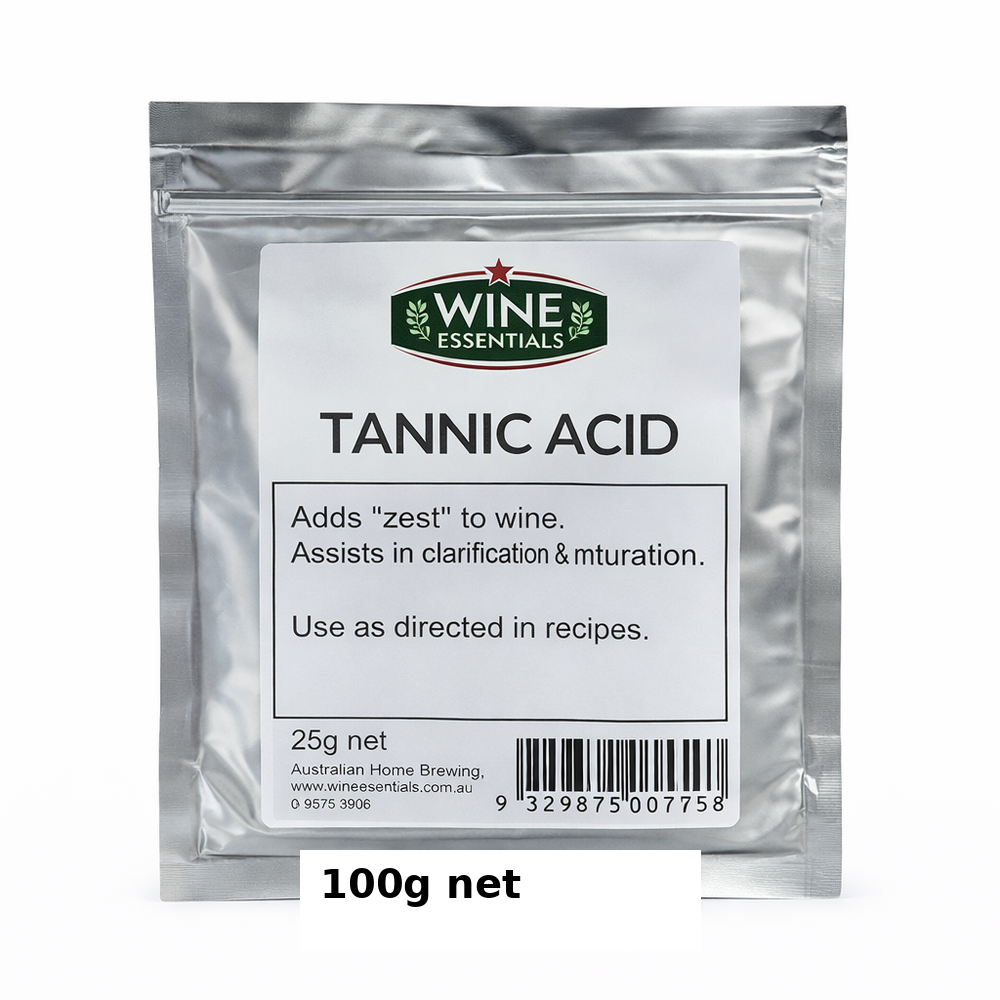


Tannic acid is a purified, food-grade tannin used to add structure, grip and ageing potential to homemade wine. If a wine tastes thin, flat or soft in the mouth, a small dose of tannin is usually the missing piece.
Most orders dispatched within 1-2 business day from Melbourne. shipping calculated at checkout. View shipping information
Tannic acid is a purified, food-grade tannin used to add structure, grip and ageing potential to homemade wine. If a wine tastes thin, flat or soft in the mouth, a small dose of tannin is usually the missing piece. It works in reds, whites and fruit wines, and this fine powder dissolves easily and comes in 25g, 100g, 500g and 1kg packs.
Best suited to
Technical specs
Which size do I need?
When to choose tannic acid over grape tannin
Tannic acid is a purified tannin, so it is not identical to the grape tannin your reds pull from skins and seeds during fermentation. But it does the same job when you need to adjust a wine that is short on structure. Reach for it when a red is fermenting or ageing thin, or when a fruit or country wine has no tannin of its own to build on. If your grapes had good skin contact, you may not need any.
Keep it separate in your head from acid adjusters like tartaric or citric acid. Tannin changes mouthfeel, body and grip, not pH or sourness, so they do different jobs and are often used together in the same wine.
Practical notes
Dissolve tannic acid in a little warm water or wine first so it disperses evenly through the batch. For reds, add it before or during fermentation for structure, or a smaller dose at finishing to firm up the mouthfeel. Whites and rose need very little or none, since too much makes them harsh and drying.
The safest way to dose is a bench trial: split off a few small samples, add tannin at different rates, taste them side by side, then scale up the one you like to the full batch. It is easy to overdo, and an over-tannic wine tastes bitter, so start low. You can always add more, but you cannot take it back out.
Rust conversion: tannic acid also reacts with iron oxide to convert rust into a stable compound, which makes it handy for prepping metal before painting or sealing. This is supplied for winemaking, but the same chemistry applies.
Reviewed by the AHB Brewing Team - July 2026
Buying from us
Questions about this product, shipping and orders. See the FAQ page for more topics.
Start small and adjust to taste. As a rough guide, reds take about 0.1 to 0.3g per litre (roughly 2 to 6g in a 23L batch), while whites and rose need much less or none. The best method is a bench trial: dose a few small samples at different rates, taste them side by side, then scale up the one you prefer. Over-tannic wine tastes bitter, and it is easier to add more than to take it away.
It adds grip, body and a subtle dryness, and helps a wine age more smoothly. If a wine tastes thin, flat or soft, tannin is usually what is missing. It changes the mouthfeel and structure of the wine, not the pH or the sourness, which is why it is often used alongside an acid adjuster rather than instead of one.
Not exactly. Tannic acid is a purified, food-grade tannin, while grape tannin comes from the skins and seeds during fermentation. They are not identical compounds, but tannic acid does the same job when you need to adjust a wine that is short on structure, especially fruit and country wines that have little tannin of their own.
Usually only a little, or none at all. Whites and rose need far less tannin than reds, and too much makes them harsh and drying. If you want a touch more body, add a very small dose and taste as you go. Reds are where tannin really earns its place.
Latest from Australian Home Brewing
How-tos, product notes, and distilling guides from the people who actually brew.
50+ Years in the industry