

50+ Years in the industry
Brewing beer spirits before man landed on the moon.


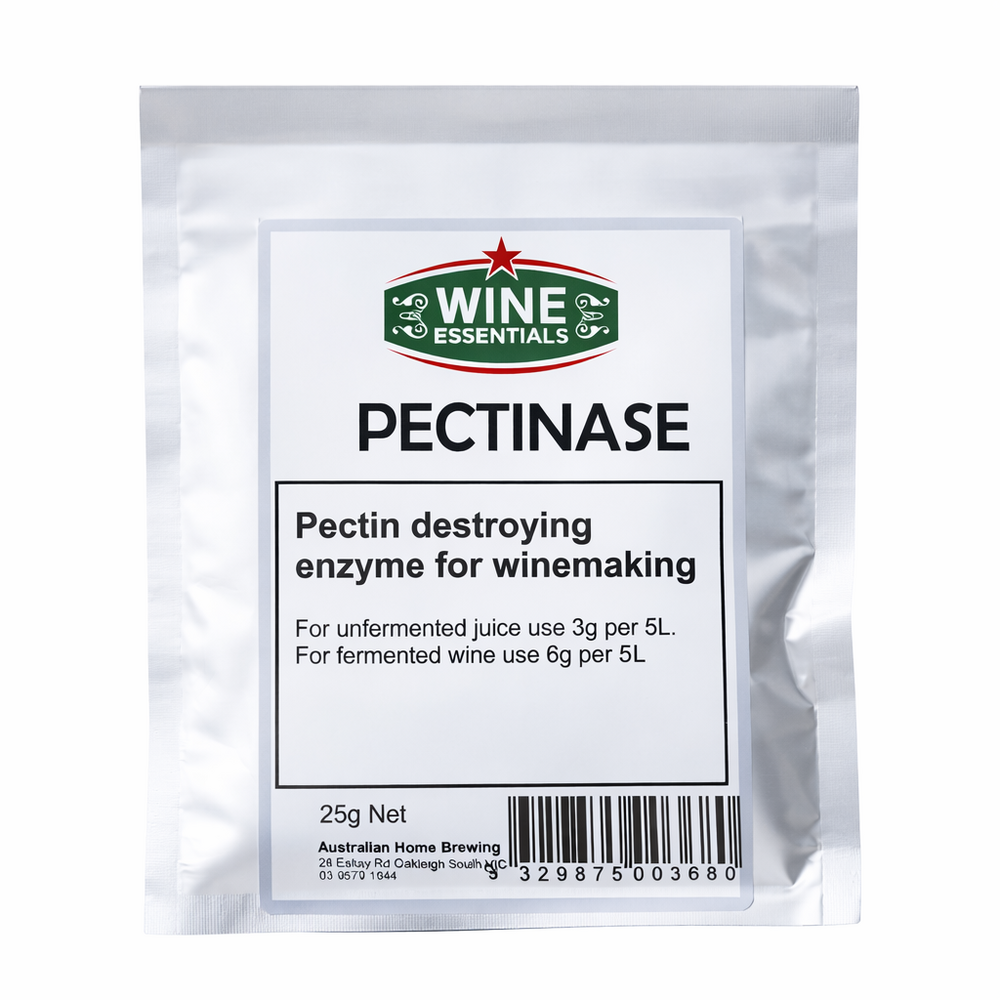
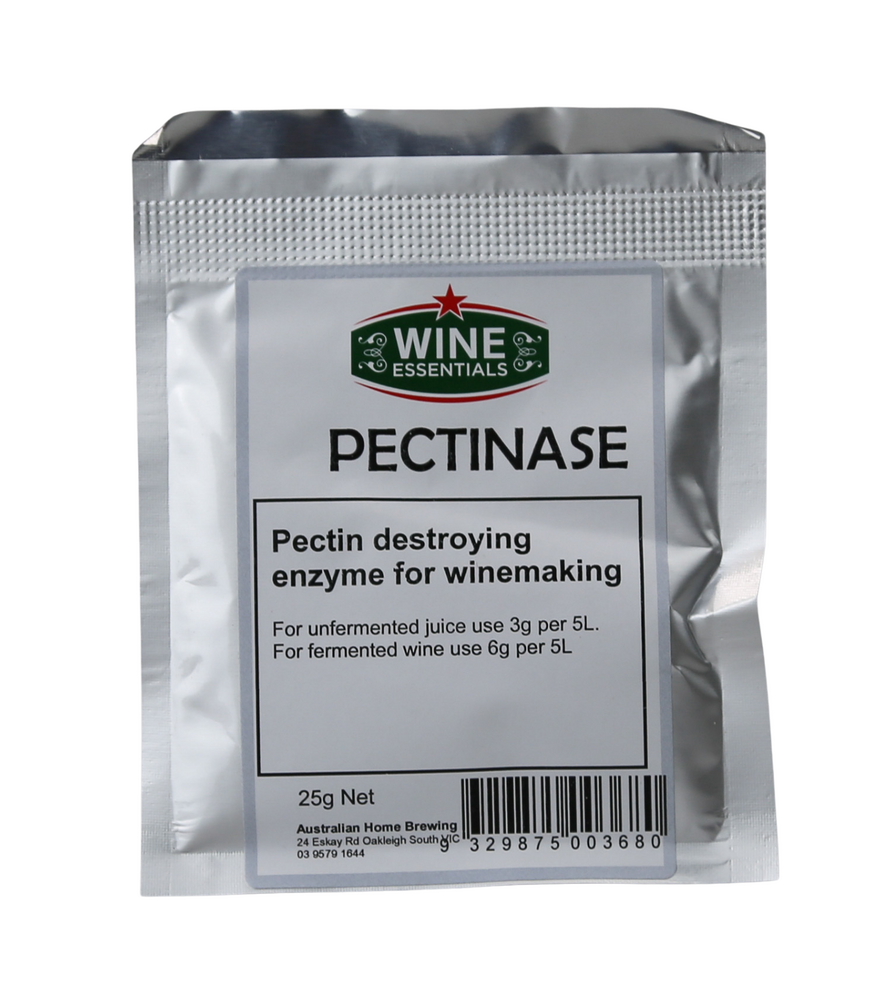

Pectic enzyme, also called pectinase, breaks down the pectin in fruit so you get more juice at crushing and a wine, cider or mead that clears. A 25 g pack treats 100 litres.
Normally shipped from our Melbourne warehouse within 2 business days (longer in peak periods). Shipping calculated at checkout by weight and postcode.
Dispatch. Orders normally ship from our Melbourne warehouse within 2 business days, longer during peak periods, fully tracked by Australia Post or one of our couriers. We email the tracking the moment it leaves.
Cost. Shipping is calculated at checkout from the parcel weight and your postcode, so you see the exact figure before you pay.
Changed your mind? Return it within 30 days of delivery, unused and in its original packaging, for an exchange or refund. Contact us first so we can arrange it. Original delivery and return postage are not refunded.
Arrived damaged or missing parts? Tell us as soon as it lands and we will replace or fix it and cover your return postage.
Warranty. Every product carries its manufacturer warranty, backed by Australian Consumer Law. Full refund policy
Pectic enzyme, also called pectinase, is an enzyme that breaks down the pectin naturally present in fruit and grapes. Pectin is the jelly-like substance that holds fruit cells together. Left alone it slows the juice coming out at crushing and causes the haze that keeps fruit wines, ciders and fruit meads cloudy.
Add it at crushing and it releases more free-run juice, more colour in reds and more flavour from the fruit. Add it after fermentation and it clears a wine that has stayed hazy.
How much to use: a 25 g pack treats 100 litres of wine, so use 2.5 g for every 10 litres. The 100 g pack treats 400 litres. This is our own in-house mix, so the rate for other brands may differ; follow the rate on the pack you have.
When to add it: at crushing is best, while the juice is being released. If you forgot, add it after fermentation to clear a hazy wine.
What it is for: any wine made from fresh fruit or fresh grapes, apple and fruit ciders, and meads made with fruit. Apples, stone fruit and berries are high in pectin and will stay hazy without it. Kit wines made from concentrate do not need it.
Storage: keep the pack sealed and cool. Refrigerate once opened.
Buying from us
Questions about this product, shipping and orders. See the FAQ page for more topics.
It breaks down the pectin in fruit and grapes. That releases more free-run juice at crushing and stops the pectin haze that makes fruit wines cloudy, so the wine clears properly. In red wine it also improves colour extraction.
We recommend it for any wine made from fruit or fresh grapes. Apples, stone fruit and berries are high in pectin and will stay hazy without it. Kit wines made from concentrate don't need it.
At crushing is best, because it works on the fruit while the juice is being released. If you forgot, it can also be added after fermentation to clear a hazy wine, at a higher rate.
A 25g pack treats 100 litres of wine, so use 2.5g for every 10 litres. This is our own in-house mix, so the rate for other brands may differ. Follow the rate on the pack.
The 25g pack treats 100 litres of wine and the 100g pack treats 400 litres.
Yes. Pectinase is the name of the enzyme; pectic enzyme is what home winemakers and brewers usually call it. Same product, same job.
Yes. Apple cider is the most common use after fruit wine, because apples are high in pectin. Use it in any mead made with fruit. A plain honey mead has no pectin and does not need it.
50+ Years in the industry