

50+ Years in the industry
Brewing beer spirits before man landed on the moon.

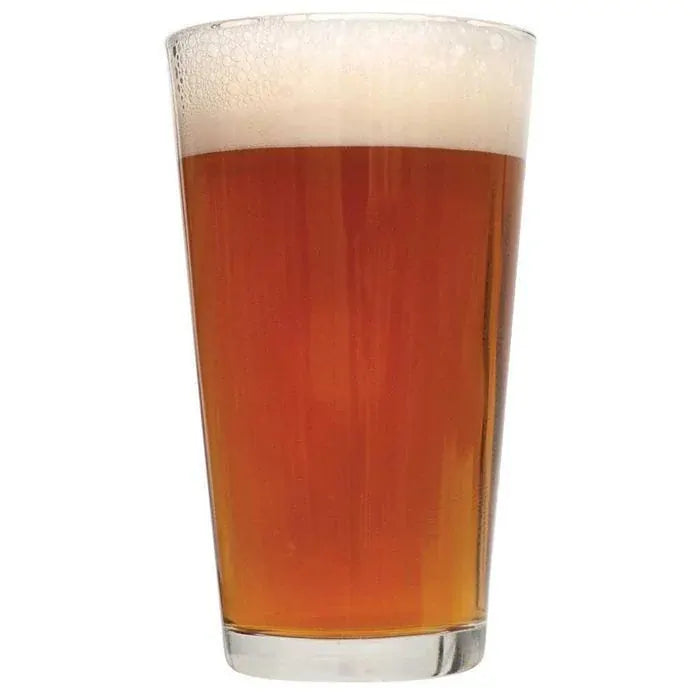
Rare Breed Red IPA is a West Coast-style Red IPA double dry-hopped with Topaz and Amarillo. The malt bill uses amber malt, pale malt, and steeped Carapils to build a firm, slightly sweet amber-red body that supports rather than competes with the hops.


Most orders dispatched within 1-2 business day from Melbourne. shipping calculated at checkout. View shipping information
Rare Breed Red IPA is a West Coast-style Red IPA double dry-hopped with Topaz and Amarillo. The malt bill uses amber malt, pale malt, and steeped Carapils to build a firm, slightly sweet amber-red body that supports rather than competes with the hops. Topaz brings earthy resin and spice. Amarillo softens it with citrus and floral character. The finish is clean and dry.
Red IPAs are a harder style to nail than a standard pale ale because the malt and hops need to balance without either dominating. This kit double dry-hops to ensure hop aroma comes through clearly while the amber malt adds the colour, body, and caramel sweetness that distinguishes a Red IPA from a standard West Coast pale ale.
Key advantages
When it makes sense
Brewing specs
What's in the kit
Tasting notes
Hamish's tip
Add the dry hops on day 4 to 5 when primary fermentation has clearly slowed. Leave for 3 to 4 days, then bottle. Adding too early means CO2 from active fermentation blows off the aroma you are trying to capture. The Topaz and Amarillo combination is assertive — on your first brew, use two-thirds of the suggested dry hop amount and adjust from there.
Reviewed by the AHB Brewing Team — June 2026.
Buying from us
Questions about this product, shipping and orders. See the FAQ page for more topics.
Yes, and it makes a noticeable difference. Add at least 25 to 50g of pellet hops directly to the fermenter once active fermentation has slowed (around day 4 to 5). Leave for 3 to 5 days before bottling. Ella, Eclipse, Citra, Mosaic, or Galaxy all work well with hop-forward IPAs. Use a hop sock or fine mesh bag to keep the pellets contained, or just drop the hops loose directly into the fermenter.
Bitterness above the expected range often means the fermentation temperature was too high, the wort was boiled too long with hops in, or the beer has not had enough time to age in the bottle. Ferment at the lower end of the recommended range (18 to 19 degrees C for most IPAs) and give the beer an extra week or two of bottle conditioning. Bitterness mellows significantly with time.
A malt extract kit provides the main fermentable sugars in a concentrated liquid or dry form, already converted from grain at a commercial brewery. You add water, yeast, hops, then ferment. It skips the grain mashing step, which cuts brew day down to about 30 to 45 minutes while still producing full-flavoured craft beer.
A fresh wort kit (FWK) delivers pre-brewed, unfermented wort in a bag, ready to pour straight into the fermenter and pitch yeast. No heating required. An extract kit requires you to dissolve the malt in hot water and add hops at various stages, which takes about 30 to 45 minutes. FWKs produce brewery-fresh flavour with almost zero work.
You need a 30-litre fermenter with an airlock, a hydrometer, a thermometer, a long-handled spoon, a bottle capper, crown seals, and bottles. A no-rinse sanitiser is essential. AHB stocks no-rinse sanitiser specifically for home brewing. AHB starter kits include all of this in one bundle if you are starting from scratch.
Allow 4 to 6 weeks total. Fermentation takes 7 to 14 days depending on temperature. After bottling, the beer needs at least 2 to 3 weeks to condition and carbonate. Most kits are at their best around week 5 or 6.
Yes. Extract recipe kits are the most approachable entry point to home brewing. The malt extract is already prepared, so there is no grain mashing or complex calculations involved. Follow the step-by-step instructions included and you will produce a solid result on your first brew.
Latest from Australian Home Brewing
How-tos, product notes, and distilling guides from the people who actually brew.
50+ Years in the industry