
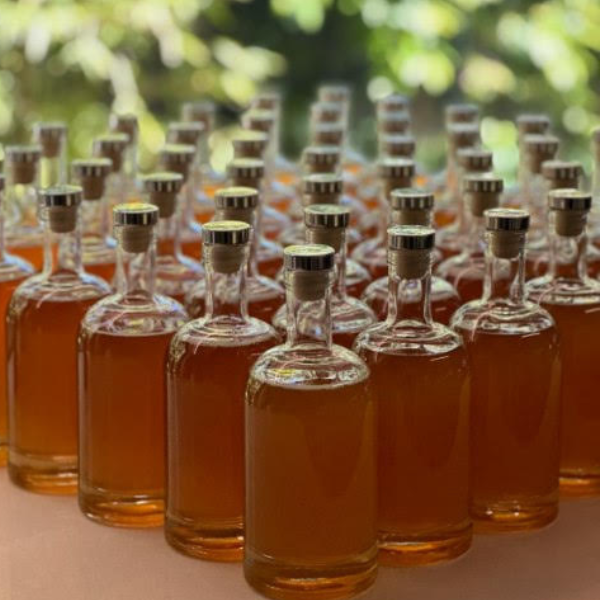
Mead is a drink made by fermenting honey and water with yeast. It can be dry, semi-sweet or sweet, and it usually sits anywhere from about 3.5% to more than 20% alcohol. To make it at home you need honey, water, yeast, yeast nutrient and a 5 litre demijohn, and a first batch takes at least five weeks.
Most of the work is in the waiting. The decision that matters is how much honey you use and which yeast you choose, because together they set the strength and the sweetness. Australian Home Brewing has been supplying home brewers from Melbourne since 1968, and everything below comes from the recipe we include with our mead making starter kit.
What is mead?
Mead is fermented honey. Most of its fermentable sugar comes from honey, and that is what separates it from beer, cider and wine. It is also called honey wine, and it may be the oldest alcoholic drink there is.
Mead isn't always sweet, that is probably the most common thing people get wrong about it. A mead can finish bone dry if the yeast ferments all the sugar, or soft and sweet if the yeast stops early. It can be still or sparkling, and it can carry fruit or spice.
What does mead taste like?
Mead tastes of the honey you made it from. Beer is built from malt, hops and yeast working together, but a mead has nowhere to hide. A honey with a strong flavour will carry that flavour into the mead, so choose carefully. Mead is a creative pursuit, and the best starting point is a honey you already enjoy eating.
Dry meads taste more like a white wine with a honey aroma. Sweet meads are rounder and softer. The warm alcohol is more obvious in a young, strong mead, and it settles as the mead ages.
Which mead do you want to make?
How much honey you use, and which yeast, decides the mead you get. These are for a 5 litre batch, topped up with water, and the strengths are approximate.
| Style | Strength | Yeast | Honey for 5 litres |
|---|---|---|---|
| Light | 3.5 to 7.5% | Premium Brewing Yeast | 750 g |
| Sweet | 10 to 11% | Premium Brewing Yeast | 1.2 to 1.5 kg |
| Dry | 14% and up | M05 Mead Yeast | 1.8 to 2.2 kg |
Sweetness comes from the yeast giving up. Premium Brewing Yeast tops out at around 10 to 11% alcohol and then stops, so with 1.2 kg or more of honey it leaves some sugar behind. Mangrove Jack's M05 Mead Yeast keeps going well past 14%, so it ferments the honey right out into a stronger, drier, more traditional mead.
For a first batch, start with the sweet style. It uses the least honey for a full-strength mead, and it's ready to enjoy sooner than a strong dry one.
What you need to make mead
- Honey. Up to 2.2 kg, depending on the style.
- Yeast. M05 Mead Yeast or Premium Brewing Yeast, as above.
- Mead yeast nutrient. Honey has very little of what yeast needs, so this one isn't optional. Without it, a mead can stall or smell of sulphur.
- Two 5 litre glass demijohns, one to ferment in and one to clear in, with a bung and airlock.
- A mini automatic syphon to move the mead off its sediment.
- No-rinse sanitiser.
- A hydrometer to confirm it has finished.
- Bottles. A 5 litre batch fills about 10 x 500 ml bottles, so a carton of 12 500 ml flip-top bottles covers it.
The mead making starter kit has the demijohns, bung, airlock, syphon, stick-on thermometer and nutrient, plus one M05 Mead Yeast and two Premium Brewing Yeast sachets, which is enough yeast for three batches. You supply the honey. The homemade mead range has each piece on its own.
How to make mead: 5 litre recipe
This is the method from our mead recipe sheet (PDF).
- Sanitise everything. That includes the demijohn, airlock and bung.
- Mix the honey and water. Stir the honey into warm water in a large sanitised pot until it has fully dissolved. Pour it into the demijohn and top up with warm water to 5 litres, leaving 5 to 10 cm below the neck so it has room to foam.
- Add the nutrient. Staggering it during the first few days gives the yeast the best run, though adding the whole dose at the start still works. Follow the dose on the pack.
- Let it cool. Bring the mixture, called the must, down to 20 to 25 degrees before the yeast goes in.
- Pitch the yeast. Add it straight into the demijohn, fit the bung and airlock, and fill the airlock halfway with water.
- Degas while it's busy. In the first half of fermentation, gently stir with a sanitised spoon so the gas escapes slowly. Trapped CO2 stresses the yeast and can cause a foam-over.
- Ferment for at least three weeks. Anywhere from 18 to 25 degrees is fine, but the lower end gives the best results and a more delicate, floral mead. It's finished when two hydrometer readings three days apart are the same.
- Clear it. Let it clear on its own, or speed it up by standing the demijohn in the fridge.
- Rack and age. Syphon the clear mead into the second sanitised demijohn, leaving the sediment behind. Refit the bung and airlock and age it for at least two more weeks.
- Bottle it. Syphon into bottles, seal them and store them somewhere cool and dark.
How long does mead take?
A batch takes at least five weeks: three weeks fermenting and two ageing, plus however long it takes to clear. After that, all mead improves with age, and there is no fixed rule for how long. As a general guide, a light mead can be ready within weeks, while a wine-strength mead usually needs 6 to 12 months in the bottle to reach its best. It comes down to your taste, so open a bottle every few months and see how it's changing.
Making it your own
Once you've made a plain batch, add fresh or dried fruit such as berries, apples or oranges, spices such as cinnamon, cloves or ginger, or herbs such as lavender, rosemary or mint. Mead with fruit is called a melomel, and mead with spice is called a metheglin.
Frequently asked questions
What is mead made of?
Mead is made of honey, water and yeast. Yeast nutrient helps it ferment properly, and fruit, spices or herbs are optional extras.
Is mead the same as honey wine?
Yes, in most cases. Mead is often called honey wine, although some honey wines from other traditions are made differently.
Is mead sweet?
Not always. Mead can be dry, semi-sweet or sweet, depending on how much honey you use and whether the yeast ferments all of it.
How much honey do I need for mead?
For a 5 litre batch, use 750 g for a light mead, 1.2 to 1.5 kg for a sweet mead, and 1.8 to 2.2 kg for a dry mead.
How strong is homemade mead?
Homemade mead runs from about 3.5% to 14% and up, depending on the honey and yeast. Our recipe gives a sweet mead of 10 to 11% and a dry mead of 14% and up.
How long should mead age?
At least two weeks after fermenting, but all mead improves with age. A wine-strength mead usually needs 6 to 12 months in the bottle to reach its best, so taste a bottle every few months.
Do I need yeast nutrient for mead?
Yes. Honey is low in the nutrients yeast needs, so mead without nutrient can stall or smell of sulphur.
Is it legal to make mead at home in Australia?
Yes. Making mead at home for yourself and to share with friends is legal, the same as beer, wine and cider. Distilling is different, and our guide on whether it's legal to distil alcohol in Australia explains why.
Ready to start?
The mead making starter kit is the shortest route to your first batch: pick a honey you like, choose your style and give it time. If you get stuck, call the shop on 03 9575 3900 and ask us.

Leave a comment
This site is protected by hCaptcha and the hCaptcha Privacy Policy and Terms of Service apply.